Stem Cells vs. Exosomes in Skincare: What’s the Difference?
Next-gen skincare has transformed the way we think about what’s possible for skin longevity. As regenerative science continues to evolve, so do the technologies behind many of today’s most advanced skincare products.
Among the most talked-about innovations are stem cells and exosomes. While they’re often mentioned together, they’re not the same thing. In fact, understanding the difference is one of the most common questions people ask when researching renewing skincare.
If you’ve ever wondered whether stem cells or exosomes are better for your skin, you’re not alone. Although both technologies have similar roots, they differ significantly in what they are, how they’re used in skincare, and the role they play in supporting visible skin renewal. Understanding those differences can help you make more informed decisions when choosing products designed to improve the appearance of aging skin.
Stem Cells vs. Exosomes at a Glance
| Stem Cells | Exosomes | |
|---|---|---|
| What they are | Living cells that can replicate themselves | Naturally occurring extracellular vesicles that have the potential to reprogram the appearance of skin |
| Size | Too large to penetrate skin (7-70 micrometers) | Much smaller (typically 30-150 nanometers) |
| Use in topical skincare | No topical skincare products actually contain living stem cells | Human-derived exosomes can be used in cosmetic skincare with proper formulation |
| Use in injectables | Not yet FDA-approved for aesthetic skincare injectables | Not yet FDA-approved for aesthetic skincare injectables |
| Safety | Risk of abnormal cell growth | Non-living and cannot divide or replicate |
| Stability | Require freezing and specialized conditions to remain viable | Can be incorporated into topical skincare when properly stabilized |
| Best suited for | Regenerative medicine research and clinical applications (not for individual use) | Advanced topical skincare focused on visible signs of aging |
Although stem cells and exosomes are often discussed together, they are very different. Stem cells are full living cells with the unique ability to self-renew and develop into specialized cell types. In the body, they are important for tissue maintenance and repair.
Research into how stem cells work was one of the first steps of regenerative science. Understanding how they work was key to unlocking the potential for future skincare ingredients. However, stem cells themselves cannot be used in topical skincare. Because they are living cells, they require specialized freezing and handling. What’s more, they are large cells that cannot penetrate the skin.
Instead, researchers have increasingly turned their attention to exosomes, tiny cell-free extracellular vesicles that carry a complex cargo of peptides, phosphoproteins, and antioxidants. This unique nature has made exosomes one of the most promising frontiers in skincare.
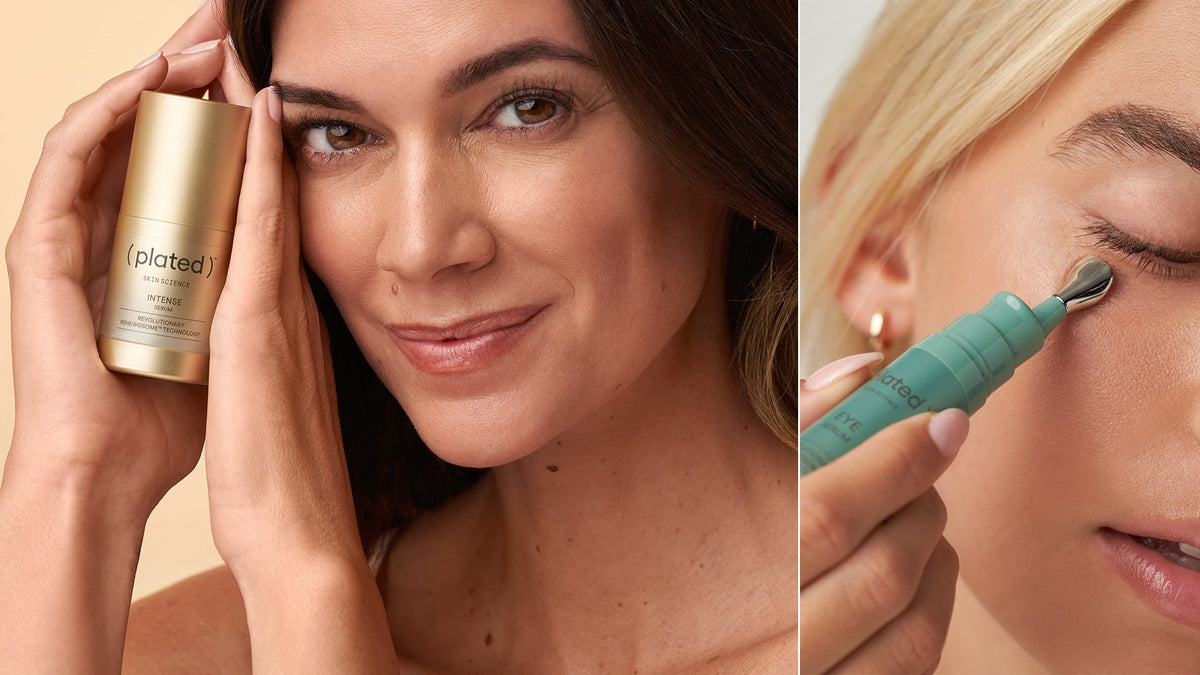
( plated ) Skin Science harnesses platelet-derived exosomes developed through more than 20 years of research by Mayo Clinic physician-scientists. Our shelf-stable serums preserve intact platelet-derived exosomes in an advanced topical formula designed to support visible skin renewal.
Are Exosomes Better Than Stem Cells for Skincare?
Yes, exosomes can be used in skincare where stem cells cannot.
Stem cells have played an important role in advancing regenerative medicine research, but they’re not typically used as living cells in topical skincare products. Instead, many skincare formulations contain plant stem cell extracts or ingredients inspired by stem cell research rather than living human stem cells themselves.
Exosomes, on the other hand, are uniquely suited for topical skincare. These naturally occurring extracellular vesicles are cell-free and can be formulated into cosmetic skincare products designed to support visible skin renewal. Rather than being living cells, exosomes naturally carry protein-based components, including peptides, phosphoproteins, and antioxidant enzymes, within a protective lipid bilayer that your skin knows how to use.
At ( plated ) Skin Science, platelet-derived exosomes are sourced from human platelets and developed specifically for topical skincare. This allows the technology to deliver naturally occurring components the skin is designed to recognize while remaining shelf-stable and appropriate for cosmetic use.
Rather than asking whether one technology is “better” than the other, it’s more accurate to say that they serve different purposes. Stem cells have broad applications in regenerative medicine, while platelet-derived exosomes have emerged as one of the most advanced technologies specifically for supporting visible skin renewal through topical skincare.
Are Exosomes Safer Than Stem Cells?
Even in medicine, stem cells present unique challenges because they are living cells. They require specialized collection, processing, storage, and handling to remain safe and viable. As a result, living stem cells are not used in topical skincare products.
On top of stability concerns, stem cells have the potential to create abnormal cell growth. In the U.S., there are no FDA-approved stem cell products for aesthetic indications, and clinics offering stem cell injections for cosmetic rejuvenation are generally doing so outside of an FDA-approved indication.
One of the biggest misconceptions in regenerative skincare is that topical exosome products contain living cells. They do not. Instead, they naturally have protein-based components that help support the appearance of healthier-, smoother-, and younger-looking skin.
Because platelet-derived exosomes are cell-free, they can be purified, tested, and formulated into topical skincare products that meet rigorous quality and safety standards.
At ( plated ) Skin Science, platelet-derived exosomes are sourced from FDA-regulated blood donation centers and undergo extensive purification and quality testing. Understanding this distinction helps explain why exosomes have become such an exciting advancement in cosmetic skincare. They allow scientists to harness the benefits of regenerative science without using living stem cells in topical formulations.
Do Exosomes Replace Stem Cells in Regenerative Skincare?
No. Although they’re closely related, exosomes and stem cells are not interchangeable, and one does not replace the other. Stem cells and exosomes each play distinct roles in regenerative science. Stem cells are living cells capable of developing into specialized cell types, while exosomes are naturally occurring extracellular vesicles released by cells. In topical skincare, however, the conversation shifts.
Most cosmetic skincare products do not contain living human stem cells. Instead, they may incorporate plant stem cell extracts or ingredients inspired by stem cell research. Platelet-derived exosomes, by contrast, are specifically formulated for topical skincare and deliver naturally occurring protein-based components that support visible skin renewal. Rather than replacing stem cells, exosomes represent a different approach. They allow skincare brands to incorporate advanced regenerative science into topical formulations without using living cells.
For consumers, that distinction is important. While stem cells continue to be studied for their potential in regenerative medicine, platelet-derived exosomes have emerged as one of the most practical and innovative technologies for addressing visible signs of aging through everyday skincare.
Why Platelet-Derived Exosomes Matter
Exosomes can come from many different sources, but platelet-derived exosomes stand apart because they originate from human platelets and have one clear superpower: “Renew and Refresh.” They address areas of visible skin damage and help nourish the skin’s appearance to fight everything from the look of wrinkles and dark spots to dullness and more. Unlike plant-derived exosomes, which carry signals designed for plant biology, or animal-derived exosomes, which come from another species, platelet-derived exosomes contain a complex cargo of proteins, peptides, antioxidants, lipids, and nucleic acids that is naturally relevant to human skin. This makes them especially well suited to support visible renewal and help improve the appearance of smoother, healthier-, and younger-looking skin.
The Bottom Line
Stem cells and exosomes are often discussed together, but they play very different roles in regenerative science and skincare.
While stem cells continue to advance the field of regenerative medicine, platelet-derived exosomes have emerged as one of the most practical and exciting innovations in topical skincare. Because they’re cell-free, they allow regenerative science to be incorporated into everyday skincare formulations without the use of living stem cells, making them uniquely suited for supporting visible skin renewal. As regenerative skincare continues to evolve, understanding the differences between these technologies empowers consumers to make more informed decisions based on science rather than marketing claims.
Frequently Asked Questions
What’s the difference between stem cells and exosomes?
Although they’re often mentioned together, stem cells and exosomes are fundamentally different. Stem cells are living cells capable of developing into specialized cell types. Exosomes are naturally occurring extracellular vesicles released by cells that carry protein-based components. In skincare, exosomes are formulated into topical products designed to support visible skin renewal, while living human stem cells are not typically used in cosmetic skincare products.
Are exosomes better than stem cells for skincare?
Yes. Stem cells can’t be used in topical skincare. Stem cells have important applications in regenerative medicine research, while platelet-derived exosomes have become one of the most advanced technologies for topical skincare. They’re specifically designed to support the appearance of smoother-, brighter-, and younger-looking skin through cosmetic formulations.
Do skincare products contain living stem cells?
Generally, no. Most cosmetic skincare products do not contain living human stem cells. Instead, they may use plant stem cell extracts or ingredients inspired by stem cell research. Platelet-derived exosomes offer a different approach by incorporating naturally occurring extracellular vesicles into topical skincare formulations.
Why are platelet-derived exosomes different?
Source matters. Platelet-derived exosomes are derived from human platelets and contain naturally occurring protein-based components, including peptides, phosphoproteins, and antioxidant enzymes, enclosed within a protective lipid bilayer. At ( plated ) Skin Science, these exosomes are developed through technology backed by more than 20 years of research from Mayo Clinic physician-scientists, sourced from FDA-regulated blood donation centers, and supported by more than 10 gold-standard clinical studies.