

The Ultimate Guide to Phosphoproteins
For skincare junkies who want to go deeper...
Let's start with what you already know.
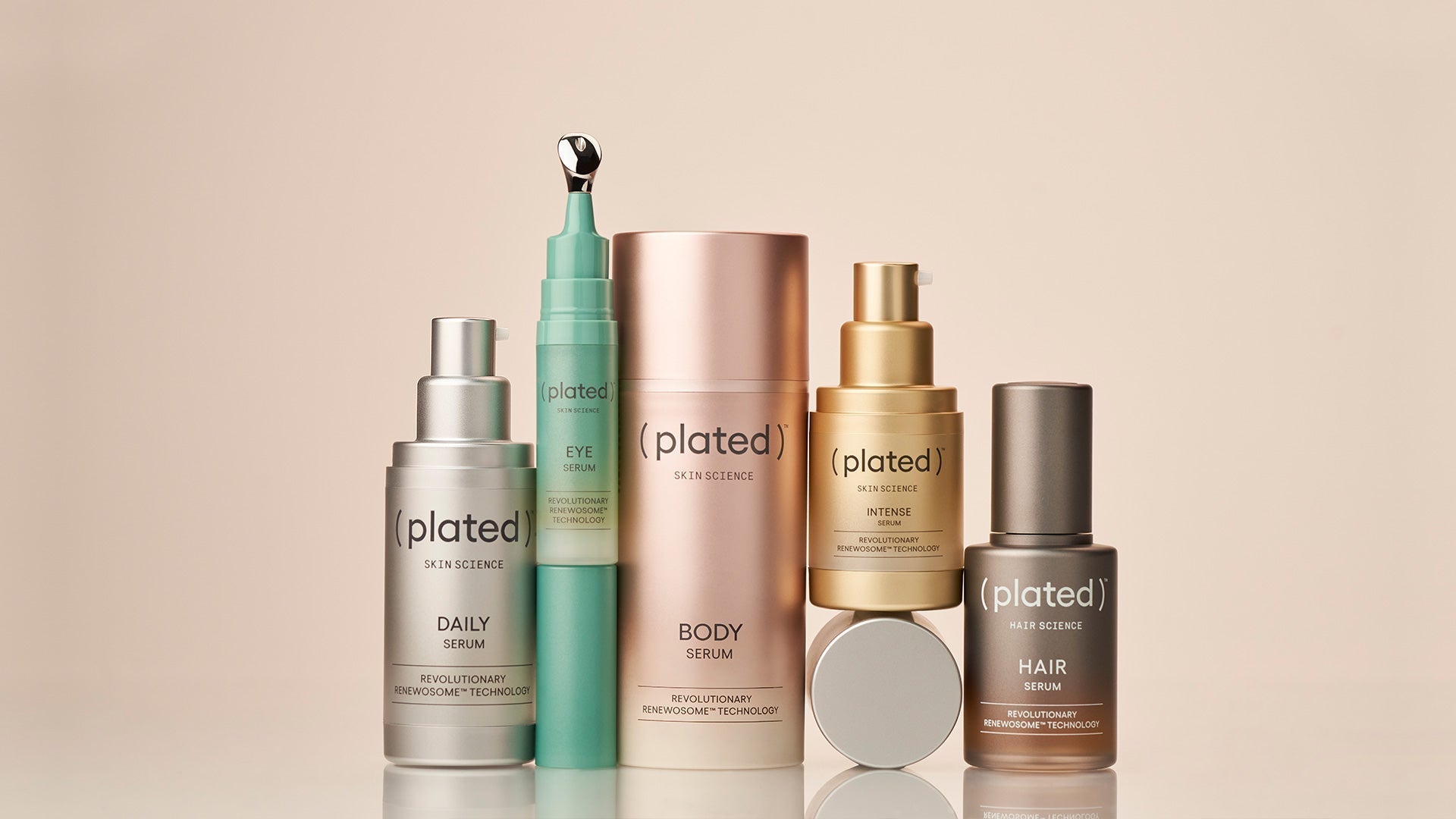
Proteins are essential for skin. But not all proteins are the same. ( plated ) Skin Science offers proteins that no one is talking about... yet. Phosphoproteins.
What makes a phosphoprotein?
Think of phosphoproteins as proteins with a superpower. Phosphoproteins are proteins that have gone through phosphorylation, a switch that alters protein charge and activity. That small addition changes EVERYTHING. Think of it as the moment the mild-mannered hero enters the phone booth and comes out a SUPER HERO. It allows them to go from a simple protein to the master switch for renewal.
But here is the thing, while phosphoproteins are unmatched in their renewing potential, they are incredibly difficult to isolate and formulate in topical skincare. The good news is that they exist inside intact platelet-derived exosomes as one of the key components of the cargo.
Why does this matter in skincare?
Most serums contain isolated peptides or antioxidants that are selected, manufactured, and added one by one. Phosphoproteins are different. They are part of a naturally occurring, renewing composition in platelet-derived exosomes. When delivered within intact human-derived exosomes, they remain protected by a lipid bilayer. That protection matters. Without that structure, these super proteins can degrade or lose stability, losing the very spark for renewal we want.
Why aren't other brands talking about phosphoproteins?
They can't. Why? Most products are not built around intact human-derived exosomes. Even if they claim to be exosomes, they haven't done the work to ensure they have maintained that lipid bilayer. And without that native delivery architecture, phosphoproteins are unlikely to remain stable in a skincare product. This is where sourcing, testing, and validation become critical. And we are proud to say we take each of these steps seriously.
It's not just about listing ingredients, and that's what most people don't know. An ingredient can be on a label, but is it stable? Does the formulation support the delivery of those ingredients? ( plated ) confirms the integrity of our exosomes and of our formulations.
So what does this actually mean for your skin?
Platelet-derived exosomes contain skin-native:
- Peptides
- Antioxidants
- Lipids
- And phosphoproteins
All of this cargo is safely contained within a lipid bilayer protective "shell." Keep in mind, these ingredients don't work in isolation, but serve as a symphonic composition of renewal. If exosomes are the sweet talkers, phosphoproteins are the language. They know exactly what to say and who to talk to, helping you achieve that youthful-, glowing-looking skin.

How to make the most of phosphoproteins
( plated ) exosomes naturally contain phosphoproteins as part of the precious cargo that makes this technology so unique. But how you apply it matters. To ensure you're getting the most out of every drop, start with freshly cleansed, dry skin. Make sure all cleanser residue is thoroughly rinsed away before application.
( plated ) should always be the first product applied to the skin. Avoid toners or other skincare products beforehand. We don't want to interfere with the lipid bilayer that protects and carries the delicate architecture inside each exosome. Let it dry completely for roughly 5 minutes before moving to the next step in your routine.
These simple steps, used once or twice daily, help you maximize performance, supporting balance and delivering the full value of the phosphoproteins and native components within ( plated ) exosome serums.
Written and reviewed by Josie Capozzi, Wilton, CT, Licensed Esthetician, specializing in regenerative and longevity aesthetics, barrier repair, and blemish-prone skin



%20Skin%20Science%20offers%20proteins%20tha...)